Finding free fonts for commercial use isn’t always easy, but I have compiled a pretty extensive list here of the best places to find free fonts for commercial use.
This post may contain affiliate links.
Instead of waiting for 3rd party ads to load, you get a list of hand-picked ads that I manually link to and make a small commission if you purchase from that link at no extra cost to you. I also link to other places I don’t make a dime if you buy. Don’t buy anything you don’t want.
Read more about it here: Affiliate Disclosure
I really made the Overview much longer than a normal “overview,” but it’s useful so I’m keeping it. Sorry if you have to scroll to get to the list of places…
Table of Contents
Overview of Fonts Copyrights
The Definition
The copyright of fonts is slightly different than most copyrights. And it’s confusing, gray area, and hairy. It was explained very differently by attorneys 20 years ago than it is now.
20 Years ago, the law was more like this… Fonts can be used for one of two reasons…
- Typeface: meaning the letters that are used in a document, articles, books..
- Typography / Design: meaning the font that is used in logos, advertisements, t-shirts, etc.
I personally have always seen this distinction on a personal level because in my mind, if I’m using the font to convey a message, say in a document, 12 points, double spaced, like a letter to my boss, then it’s probably safe to use it regardless. If I’m using the font for typography reasons, like a design to share on social media that quotes someone, then it’s art, and I’m using someone else’s art to make my own.
Back in the day of early internet, that’s kind of how the law leaned. Now a days, they seem to be veering away from the artistic side and leaning towards the technical computer side.
Fonts and Typefaces were apparently always two different things, though often used interchangeably now. And according to the internet, these are the definitions for them…
- Typeface: The way the letters look / the design
- Font: The size, weight and style of the letters
Which I know is confusing because I just defined Typeface as two polar opposites. But we are in an age where nobody is using these words consistently, so they really have to be defined in a legal document. But really the typeface is the LETTERS ON A BLOCK USED FOR PRINTING. That entails the design of the letters, but also the purpose, used more for reading, less for art.
Even more confusing, if you research this subject, FONT often has that definition, and then they add “it’s the computer’s way of displaying the typeface.”
I guess in their interpretation now, instead of focusing on the purpose of the font, they are honed in on aspects… the design itself vs how it’s displayed. So, Helvetica is a typeface, not a font. Making it light or bold, making it 12 px or 18 px, those are fonts. And making it show up on the computer screen with anchor points as a vector, that’s a font. Legally.
Now in graphic design, we have different definitions and usage of those words.
The Legal Law of Fonts and Typefaces
I’m not an attorney, and my advice is regardless, follow your licensing agreement, but I’m going to explain my interpretation of all this.
Basically, legally, the typeface has no protection. But a computerized typeface (people often refer to this as a font) does.
Technically, if you use a font / typeface on a computer, you need permission to do so. Once printed, it’s fair game.
Even more technically, you can remake a font (print it, scan it, and make your own glyphs from that) and it be a new font, your font. For instance, there’s many versions of Helvetica like Coolvetica because it’s a Helvetica. The Helvetica look of letters cannot be copyrighted because in the end, it’s just the alphabet.
If you created your own language with its own alphabet, I don’t know, can you copyright a language?
Imagine how crazy it would be if the lowercase L was copyrighted in a typeface. We’d all have to come up with our own version of a line.
When you read things like that, it feels like you should be able to use any font you feel like. For any reason.
You cannot own the letter A.
I should be allowed to use the letter A.
But the fontographers found a loophole in the law. While typefaces are not protected, computer software is, and the idea of computer codes for the glyphs, the vector anchor points and curves, all that can be copyrighted.
So unless you are literally carving out your own printing blocks, you pretty much should be treating fonts / typefaces like they are copyrighted.
Even more important, ethical moral don’t-be-a-dickness states that if the letter is the forefront of your design, you should get permission from the person who designed that letter. That was a lot of work; they deserve to get paid for it.
I like Crowdspring’s Article regarding Font Legalities
How do you know if you can use a font?
For the most part, you can purchase a font or find free ones, and go by the EULA (end user license agreement) or license.
Sounds easier than it is because a lot of the fonts don’t have that with the font. Some fonts, we just will never know if we are allowed to be using them or not.
Safest is to get fonts from trusted sources, and use within the guidelines.
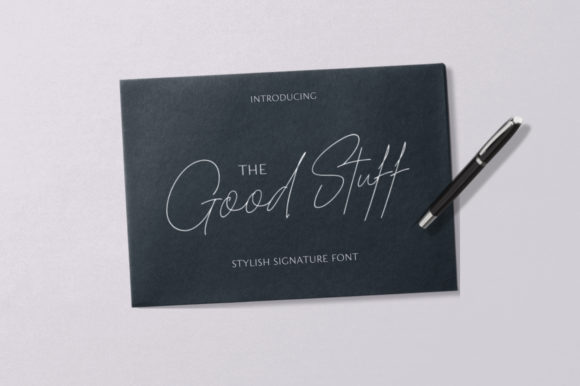
Creative Fabrica
Free fonts, $1 fonts… Amazing license and terms of use. Affiliate link.
Popular Types of Use
There are varying license agreements out there, so using a new font really entails quite a bit of research.
“Free for commercial use”
When the EULA just says, “Free for personal and commercial use,” without explaining what that is, you probably want to do more research because that’s not enough information anymore.
I do link to places like that below.
Commercial Use by itself doesn’t necessarily mean that you can use it for anything.
Some people really don’t care how you use their font when they say that, some do. Some didn’t care when they put it up for free years ago but now they kind of do now that they offer fonts you can buy.
So you want to try to do some research:
- Google the name of the font maker
- Click all the links related to the font
- Try to find the “paid license” and buy it
- Download the font and read all the text documents and pdfs that came with it
If you can’t find anything, save all evidence you have for the use, and you’re probably safe to stick to a basic desktop license for use of the font. Or the safest, don’t use that font.
Free fonts for commercial use doesn’t always mean its free. It’s possible your use may be some kind of use the font maker wants to charge for.
For the most part, when you purchase a font, you aren’t purchasing the font as much as the license that lets you use it.
Common Licenses
Many fonts have a commercial use Desktop License where you can only use the font in ways that cannot be copied (like highlight, copy and paste), such as a JPG image or a printed document.
PDF’s are a gray area because they are considered printed and you can’t copy text from them, but you usually have to embed the font file to get it to print right, and embedding is beyond the desktop license.
Embedding fonts where someone can copy and paste text, like a website or ebook, that usually has a separate license.
Using Fonts on products for sale is also something that sometimes you aren’t allowed to do. Sometimes the license will ok printing your own hats and mugs and selling them, but not uploading to a direct printing site like Zazzle. Some have stipulations on how many end products you can make and/or sell. Others have design stipulations (that the text cannot be the ONLY thing on the design).
Using fonts for Client Work is usually ok with most licenses. But if you want to provide source files, or “distribute the font to a client,” you’re probably going to want to buy the font again for your client.
Using the fonts in templates you provide or sell is usually a big no-no and requires contacting the font maker directly. It’s probably safest to stick to Google’s Fonts for this because they are completely open source.
Redistributing fonts is usually a big no-no without expressed permission from the font maker. They don’t usually mind though if you link to them in a round-up post.
My Personal Font Choices
For websites and ebooks, I try to stick to Google Fonts. It’s just easier that way.
The fonts I buy or download, I use in graphics that are saved as a jpg or png. Some kind of file where you can’t copy the text.
I don’t even mess with “Personal Use Only” fonts.
When I do client work, I treat them like a blank computer screen. My fonts are not their fonts. They need to get their own fonts.
Best Sites for Free Fonts for Commercial Use
♥♥ Google Fonts: Completely free open source fonts. Use for anything. Searching is also easy as you can type in anything, title or paragraph, choose the font size, and see all the options with those filters.
♥♥ Set Sail Studio: He offers a couple freebies, but worth looking into because these are some of the most magnificent fonts out there. Plus he offers one of his SVG fonts for free.
♥Creative Fabrica offers quite a bit of free fonts in addition to fonts you can buy or subscribe. The license is lenient for what you get, and they spell it out beautifully. Also has $1 Deals. Affiliate link.
Font Bundles is just like above. They provide paid fonts, but they have a lot of $1 deals and offer some of their fonts for free for a limited time. And their license is very doable and well spelled out.
Crella also has an ongoing freebie list + dollar deals + purchase or subscribe. And their license too is very spelled out.
♥Font Squirrel: The best site for free fonts for commercial use. Just about every font they list has commercial use for free, but they don’t all have a clear license.
♥Befonts is also a site a free fonts, but some are personal use only. For a good list of 10 Commercial Free fonts from their site, check out 10 Newish Trendy Commercial Free Fonts. Again, you’ll want to research specific licenses.
Behance offers all kinds of portfolio items with a lot of people advertising to their paid fonts and artistic graphical googies, as well as their free ones. My Collection of mostly free fonts (some are donationware).
75 Best Free Fonts for Designers is an article by Creative Bloq that recommends some awesome looking fonts.
Blue Vinyl fonts has some for free, and some for sale. The free ones include both lettering and dings, and her dings are genius. I frequently used 60’s chic for the little retro sparkle star before I created one of my own.
Vic Fieger has a lot of fonts on Dafont and more professional versions on Cheap Fonts Pro.
Dafont is a site of free fonts, but you will have to search for the license. Some fonts have a “read me” file with them that stipulate license use, so you sometimes don’t know how you can use it until you download it and extract it (right click, extract files).
Font Fabric has free and paid fonts, but most of the free ones (all but one) are free for personal and commercial use.
Adobe Fonts is free with any creative cloud subscription.
Pin It